A slice from a piece of sheet metal at the shop, a scrape while loading boxes at the warehouse, a cut while cleaning up the yard: most of the time it gets rinsed, covered and forgotten. The trouble starts when, four or five days later, the wound hurts more than it did at first, looks redder and is leaking something yellow. This guide is for that moment: how to tell whether what you see is part of normal healing or an infection getting started, and when it makes sense for the clinic's medical team to take another look.
What is normal and what no longer is
Every wound swells a little at the beginning. That is how the body starts repairing it, and it confuses a lot of people: they see a pink edge and assume it is infected, or they see pus and think it is "drawing out the bad stuff." The difference lies in which way things are heading.
| Expected while healing | What points toward infection |
|---|---|
| A thin pink edge that stays the same size | Redness that covers more skin every day |
| Soreness that eases as the days go by | Pain that climbs instead of settling after day two |
| A small amount of clear or faintly yellow fluid | Thick white, yellow or greenish pus, or a bad smell |
| Skin that is warm only right at the edge | Heat and a hard area around the wound |
| You feel fine overall | Fever, chills or feeling unwell all over |
A single row from the right-hand column is already reason enough to have it looked at. Several together, even more so.
The signs, one at a time
Our wound care page lists the signs that a wound is getting infected. They are worth putting in everyday terms:
- The pain changes direction. Normally the first day is the worst. If day three or four hurts more than the beginning, something is off.
- The red is moving. A simple trick: trace the edge of the redness with a ballpoint pen and check it the next morning. If the redness has crossed the line, it is spreading.
- Heat and firmness. Pressing gently around it, the skin feels hot and firm, as if swollen from the inside.
- Pus or a bad smell when you change the dressing.
- Fever, even a mild one, with no other cause such as a cold.
- Red streaks running out of the wound and up the arm or leg. This is the sign that cannot wait (see below for what to do).
Why a wound that looked clean gets infected
It is rarely bad luck. What matters most is what stays inside: dirt, gravel, splinters or bits of the tool that you cannot see with the naked eye. The skin closes over the top, the dirt gets trapped and, a week later, the infection shows up or an abscess forms. That is why the service page stresses that thorough cleaning is the step most often skipped at home: water from the faucet washes away what sits on the surface, but not always what is lodged in the tissue.
Other things that make healing harder:
- Dog or cat bites, or wounds from nails and rusty metal
- Working with your hands in dirty water, grease or soil while the wound is open
- Picking at scabs or scratching
- Having diabetes or a weakened immune system
If you have stitches and the area turns red
When a cut has been closed with sutures, it is normal for the edges to look slightly raised and pink at first. It is not normal to get rising pain, redness that keeps widening, pus between the stitches or fever. In that case the clinic's instruction is plain: come back before the removal date you were given rather than waiting for that appointment.
And do not take the stitches out yourself because it "looks closed." The timing depends on the part of the body and how much tension the skin is under, and removal is done at the clinic.
When the pus collects in a pocket
Sometimes the infection does not stay on the surface and forms a hard, red, hot lump that over a few days starts to feel soft or full of fluid. That is an abscess. An abscess does not clear up with antibiotics alone: it has to be opened and emptied. At our Airline clinic, abscess drainage is done under local anesthesia, and afterward the medical team explains how to care for the area and when to come back for a check.
Diabetes: the small wound on the foot
If you live with diabetes, the rule changes. Wounds heal worse and run into complications more easily, especially on the feet, and the lack of pain is misleading: it can mean the nerve no longer sends a warning. A blister from new shoes or a nick while trimming your toenails deserves a prompt look, even if it does not bother you. If you already get your follow-up at the clinic, use your diabetes, blood pressure and cholesterol visit to ask for a foot check.
Caring for it at home while you decide
While you decide or are on your way, these steps help without making anything worse:
- Wash your hands before touching the wound
- Rinse the wound with clean water and mild soap, without scrubbing
- Cover it with clean gauze and change it whenever it gets wet or dirty
- If you can, keep the area raised to bring the swelling down
- Take a photo every day in the same light: it helps you compare and lets you show the progression at the visit
And what is better avoided: squeezing the wound to push the pus out, putting home remedies on it such as powders, dirt, toothpaste or grease, and taking leftover antibiotics from some other illness. Besides not working, they can mask the infection.
What happens when it is checked at the clinic
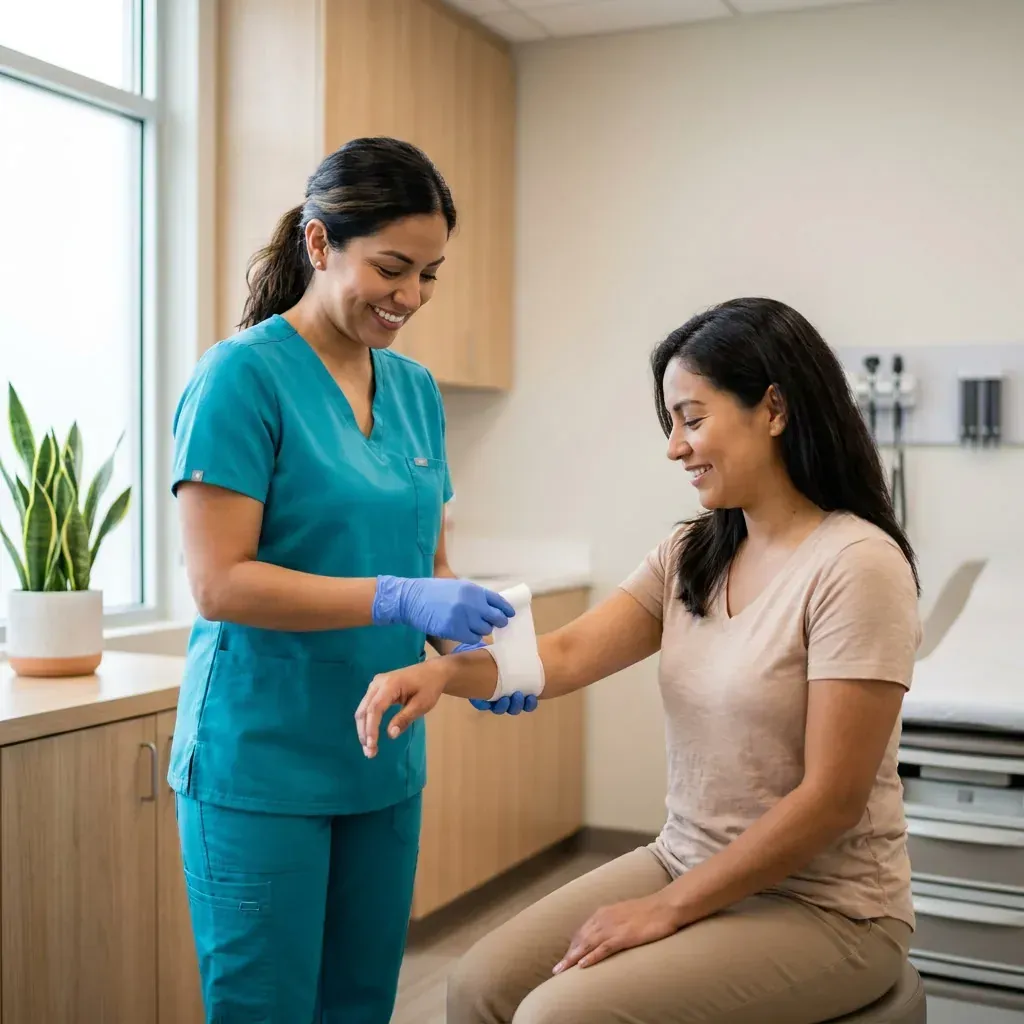
When you bring in a wound that is not doing well, the clinic's medical team cleans and disinfects it thoroughly, removes any debris left inside, decides whether it should be closed or is better left open with dressing changes, and covers it with a dressing suited to that type of wound. If the wound is deep or dirty and your last tetanus dose was more than five years ago, the booster is given. When it is needed, you are told when to return so they can see how it is coming along.
If something is prescribed at the end of the visit, the Airline clinic has an on-site pharmacy: you buy right there what the medical team prescribed, along with an explanation of how to use it and for how long. Finish the full course even if the wound looks better early on.
Wound signs that mean 911 or the ER
Skip the clinic visit and get emergency care if the wound comes with any of these:
- Red streaks climbing from the wound up the arm or leg
- Red skin spreading fast, especially with fever or chills
- A wound that keeps bleeding even when you press on it with a clean cloth
- Confusion, unusual drowsiness or feeling like you might pass out
- Swelling of the face, lips or tongue, or shortness of breath
Before you head to the clinic
If the wound has been there for several days and something on this list sounds familiar, do not put it off until the weekend. Bring a note of the day and how you got hurt (what object, whether it was dirty), the photos from the previous days, the approximate date of your last tetanus shot and the list of what you take. With that information, the medical team at the clinic on Tidwell and Airline, in 77022, can better understand why the wound stopped healing and what it needs now.
Need medical attention?
We're here to help. Call now to schedule your appointment or visit our clinic without an appointment.
Call now: +1 (346) 204-4668